Estate Vehicle Appraisal BC: Executor, Probate, and Transfer Value Support
When an estate includes a car, truck, motorcycle, or collector vehicle, there are two separate questions: who has authority to transfer it, and what value needs to be documented. This guide helps BC executors and families prepare the evidence before an appraisal or Autoplan visit.
Why buyers use this page
- Built for executors, administrators, surviving co-owners, beneficiaries, and professional advisors
- Separates ICBC transfer authority from the vehicle-value evidence an appraisal can provide
- Remote photo and document review available across British Columbia when the file is supportable
- Standard $75 FIN-320 transfer files are reviewed before acceptance; probate, court, tax, or historical-date reports may need a different scope
Estate Vehicle Appraisal BC
An appraisal does not replace a death certificate, will, grant of probate, grant of administration, or ICBC estate-transfer document. It addresses the value question. Before ordering one, identify who will receive the report, whether the value must be current or as of the date of death, and whether the vehicle is being transferred, sold, distributed, insured, or included in a legal or tax file.
Why estate vehicle files stall at the broker or advisor
The value report is only one part of an estate file. ICBC’s estate-transfer checklist changes with the registered ownership, whether there is a valid will, whether the estate is over or under the stated threshold, and whether the transfer is going to the estate, a surviving owner, or another recipient. A clear appraisal can document vehicle value, but it cannot repair missing authority documents or decide which estate path applies.
Start with the estate transaction, not the appraisal form
The correct evidence depends on who owns the vehicle now and where ownership is going next.
Surviving joint owner
A surviving registered joint owner may follow a different transfer path than an executor or beneficiary. Confirm the registered ownership and ICBC support documents before assuming a value report is required.
Executor or administrator acting for the estate
The file may need a death certificate, will, grant of probate, grant of administration, or another original or certified estate document. The appraisal supports value; these documents establish authority.
Transfer, distribution, or sale to another person
A transfer to a beneficiary, family member, buyer, or other recipient can add tax and registration questions. Tell the appraiser and broker exactly who is receiving the vehicle and why.
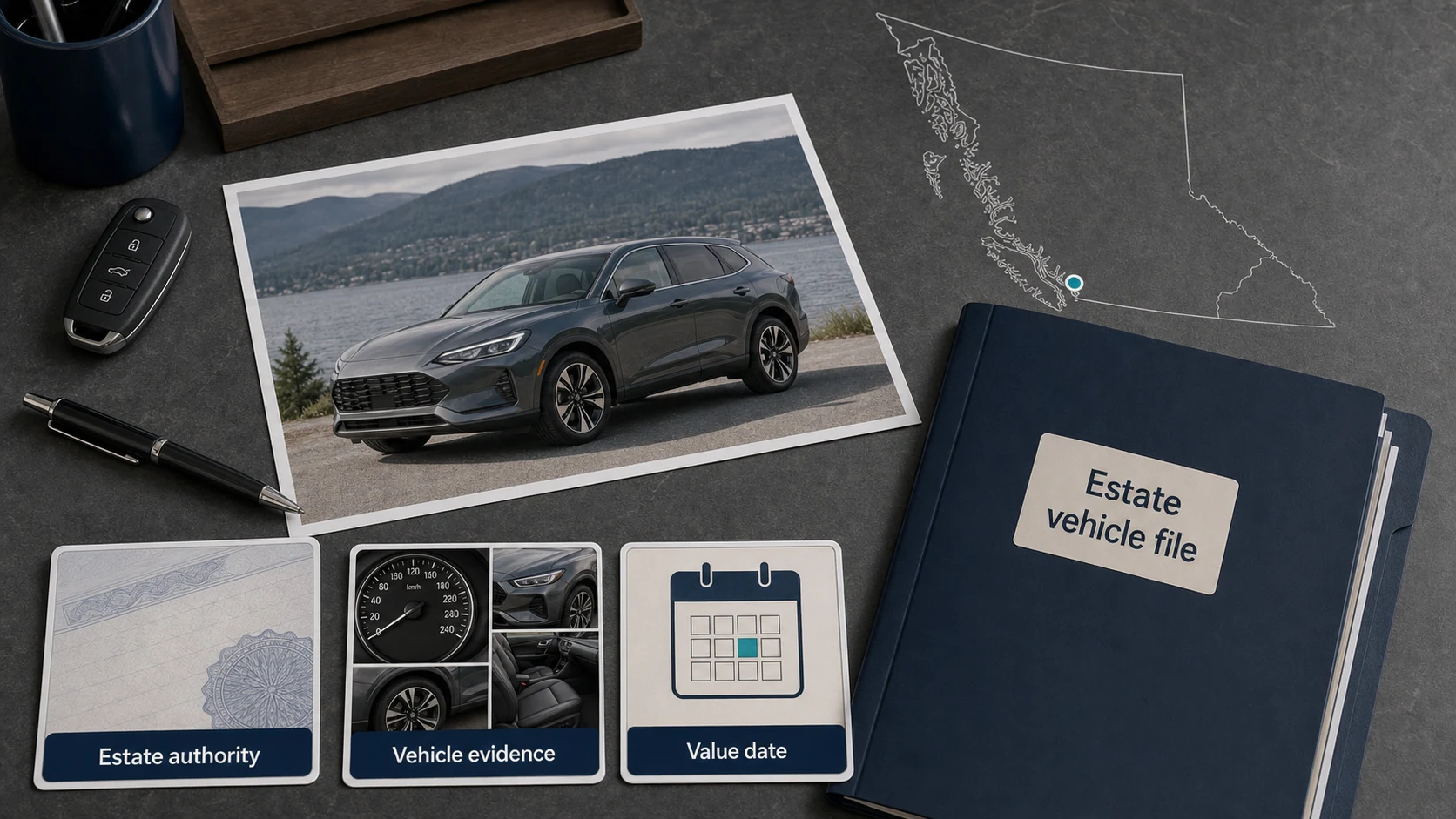
Build the three-part estate vehicle evidence file
A complete file makes it easier to determine the right appraisal scope before work begins.
1. Estate authority
Gather the death certificate and the will, grant, declaration, or other estate documents that apply. Ask the Autoplan broker, lawyer, or advisor which originals or certified copies they require.
2. Vehicle evidence
Provide registration details, VIN, odometer, clear exterior and interior photos, condition issues, service or restoration records, prior damage, modifications, and any recent market evidence.
3. Value date and purpose
State whether the recipient needs current fair market value, a date-of-death value, transfer-tax support, insurance value, sale guidance, or another defined purpose. Those are not interchangeable outputs.
Choose the appraisal output the recipient will accept
Do not assume one vehicle appraisal format works for every estate use case.
ICBC transfer or PST support
A standard FIN-320 can support an appraised retail value for eligible registration or tax paperwork. It does not replace the estate documents required to authorize the transfer.
Estate distribution or sale planning
A current fair-market-value opinion can help an executor compare a proposed sale, record a beneficiary distribution, or explain how a vehicle value was established.
Probate, court, CRA, or historical-date use
Formal legal, tax, contested-estate, or date-of-death assignments may require a report with a specific effective date, scope, methodology, inspection standard, and certification. Confirm the recipient’s requirements before relying on a standard FIN-320.
A safer estate vehicle appraisal workflow
Ask the broker, lawyer, accountant, insurer, or executor what report format, purpose, and valuation date the file requires.
Gather the estate authority documents plus a complete vehicle photo, registration, mileage, condition, and history file.
Submit the file for scope review. We confirm whether a standard remote FIN-320 is appropriate or whether the assignment needs a different report before acceptance.
Estate Vehicle Appraisal BC FAQ
Does every estate vehicle in BC need an appraisal?
No. Some transfers can be completed with the required estate and ownership documents alone. An appraisal is most useful when a broker, executor, beneficiary, buyer, insurer, lawyer, accountant, or court needs the vehicle value documented.
Is a FIN-320 enough for probate?
Not automatically. FIN-320 is designed to document appraised retail value for BC vehicle tax and registration purposes. Probate, court, CRA, or contested-estate work may require a different report, valuation date, and methodology. Confirm the recipient’s requirements first.
Can an estate vehicle appraisal be done remotely?
Often, yes, when the vehicle can be documented with complete photos, registration details, mileage, condition records, and market evidence. Complex, contested, historic-date, collector, or legal assignments may need a different inspection or report scope.
What is a date-of-death vehicle valuation?
It is an opinion of fair market value as of the owner’s date of death rather than today. Historical market evidence and the vehicle condition at that time matter, so the appraiser must know the effective date before accepting the assignment.
What estate documents does ICBC require?
The documents vary with ownership, whether there is a valid will, the estate value, and who is receiving the vehicle. ICBC’s Checklist for Estate Transfers lists the applicable death certificate, will, probate, administration, declaration, and signature requirements. Verify the current checklist with an Autoplan broker.
Does the $75 price and 1-hour turnaround apply to every estate report?
No. The advertised $75 price and 1-hour delivery window apply to accepted standard remote appraisal files. A formal probate, court, tax, contested-estate, collector, or historical-date assignment may require a different scope, timeline, and quote.
Helpful next steps
Use these supporting pages to keep moving.
Confirm the right estate appraisal format first
Tell us who needs the report, the relevant valuation date, and how the vehicle will be transferred or used. We review fit before accepting the file, and specialized legal or historical-date requirements may need a different scope.
Submit an Estate Vehicle File