Work Truck Appraisal BC: FIN-320 Support for High-Mileage Pickups and Work Vehicles
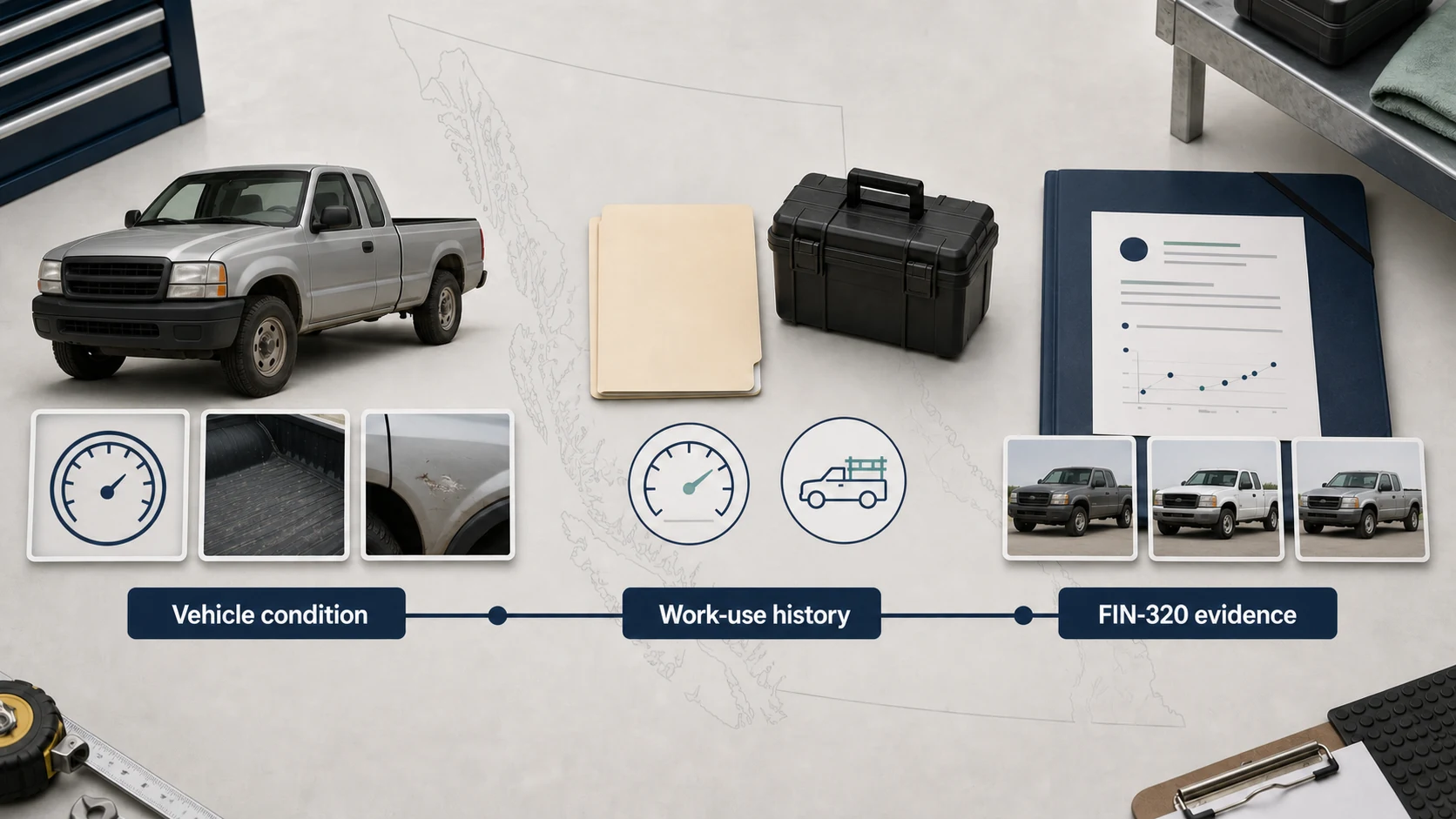
A work truck can carry mileage, rust, cab and box wear, mechanical needs, commercial-use history, or equipment that a generic reference value does not see. A remote FIN-320 appraisal documents those vehicle-specific facts for an eligible BC private-sale or registration file.
Why buyers use this page
- $75 plus tax for an eligible standard remote FIN-320 file
- 1-hour delivery after the application is reviewed, accepted, and paid
- Built for privately purchased pickups, cargo vans, utility vehicles, and older work vehicles
- Vehicle-specific evidence without promising a predetermined appraised value or tax result
Work Truck Appraisal BC
Pickups, cargo vans, utility vehicles, and older work vehicles are rarely average examples of their year and trim. One may be a clean commuter; another may have years of towing, job-site mileage, bed damage, interior wear, rebuilt history, or deferred repairs. The appraisal uses the evidence from the specific vehicle and relevant BC comparables instead of assuming dealer-ready condition. This page covers one-vehicle FIN-320 work, not fleet accounting, capital-asset, liquidation, or legal valuation assignments.
Why work-truck book values often miss the real vehicle
Reference values identify a year, make, model, and trim, but they do not inspect the truck. They may miss unusually high kilometres, worn seats and flooring, bed or cargo-area damage, rust, warning lights, tire condition, repair needs, prior fleet or commercial use, title history, and whether added equipment is included in the sale. Those facts can materially change what a buyer would pay for the specific vehicle in British Columbia.
Work-truck evidence that can affect market value
Submit what you can document clearly. Do not guess at history, equipment, or mechanical condition.
Mileage, VIN, and complete vehicle photos
Include the VIN, odometer, front, rear, both sides, cab, seats, dashboard, box or cargo area, wheels and tires, underbody areas visible safely, and close-ups of damage or wear.
Rust, body wear, and mechanical concerns
Photograph dents, corrosion, paint damage, windshield issues, warning lights, leaks visible without disassembly, uneven tire wear, and damaged interior surfaces. Add repair estimates or inspection notes when available.
Work equipment and modifications
Document toolboxes, racks, canopies, service bodies, lift equipment, towing hardware, plows, auxiliary lighting, shelving, or other installed equipment. Note whether each item is included in the sale and provide receipts or specifications when available.
Service, use, and title history
Add service records, major repair invoices, prior fleet or commercial-use records, rebuilt or salvage documents, import history, and out-of-province inspection paperwork when they apply to the vehicle.
Where this appraisal fits
A standard remote FIN-320 answers a vehicle-value question. Other assignments may need a different scope.
Private-sale PST support
If the work vehicle was bought privately and its actual condition is below the assumptions in a generic reference value, the FIN-320 can document a vehicle-specific market value for eligible broker paperwork.
Out-of-province, rebuilt, or imported work vehicles
Prior registration, inspection findings, title branding, regional use, and import history can all affect value. Include those documents so the valuation reflects the complete file.
Refund documentation after registration
If PST was already paid, the appraisal may support the valuation side of a FIN-355MV refund file. Payment proof, registration records, and the applicable filing deadline still matter.
Fleet and business valuation work is separate
Fleet accounting, capital-asset examinations, liquidation values, lender reports, and legal assignments can require multiple vehicles, an effective date, on-site inspection, or a different report format. This $75 page does not promise that broader scope.
How to prepare a cleaner work-vehicle file
A complete upload helps the appraiser separate ordinary age from hard-use wear and vehicle-specific condition.
Start with transfer and ownership documents
Upload the signed APV9T or relevant transfer document, bill of sale, current registration details, and proof of payment when the workflow requires it.
Show the work areas, not only the exterior
Include the box, bed liner, tailgate, cargo floor, shelving, seat bolsters, steering wheel, pedals, tires, and any area where commercial use or high mileage is visible.
Explain equipment and repair needs plainly
List what stays with the vehicle, what is removable, what is damaged, and what work is still needed. Receipts and written estimates are stronger than unsupported descriptions.
How the remote work-truck appraisal works
Submit the transfer details, VIN, mileage, complete photos, condition notes, and any service, equipment, repair, inspection, or title-history documents.
We review whether the evidence supports a standard remote FIN-320 and request missing details before accepting the file.
After acceptance and payment, the signed FIN-320 is delivered by email for the eligible BC registration or refund-support workflow.
Work Truck Appraisal BC FAQ
What types of work vehicles can be reviewed?
Privately purchased pickups, cargo vans, service vehicles, utility vehicles, and older work trucks may fit when the vehicle and evidence can be reviewed through the standard remote FIN-320 workflow.
Does prior commercial or fleet use affect market value?
It can. Commercial-use history may help explain mileage, interior wear, cargo-area condition, maintenance patterns, and buyer demand. The effect depends on the evidence and the specific vehicle rather than the label alone.
Does installed equipment always increase value?
No. Useful, transferable, well-documented equipment may affect value, but worn, specialized, damaged, removable, or unwanted equipment may add little. Show what is included and provide receipts or specifications when available.
Can a work-truck appraisal be completed remotely?
Often, yes, when the transfer documents, photos, mileage, condition details, and relevant history are complete. A remote appraisal does not replace a mechanical or safety inspection.
What if the truck is rebuilt, imported, or from another province?
Include title-brand documents, prior registration, import records, inspection reports, and repair evidence. Those facts can materially affect the BC market value and the appraiser must see them.
Is this a fleet or capital-asset appraisal service?
No. This page covers a standard one-vehicle FIN-320 workflow. Multi-vehicle fleets, accounting, liquidation, lender, insolvency, or legal assignments may need a different report, value basis, effective date, inspection, and fee.
How much does the standard work-truck appraisal cost and how long does it take?
An eligible standard remote FIN-320 is $75 plus tax. The 1-hour delivery window starts only after the file is reviewed, accepted, and paid. Missing or unclear evidence can delay acceptance.
Helpful next steps
Use these supporting pages to keep moving.
Ready to document your vehicle's value?
Start a $75 certified FIN-320 appraisal. The 1-hour delivery window begins after your application is reviewed and accepted.
Start Your Appraisal Now