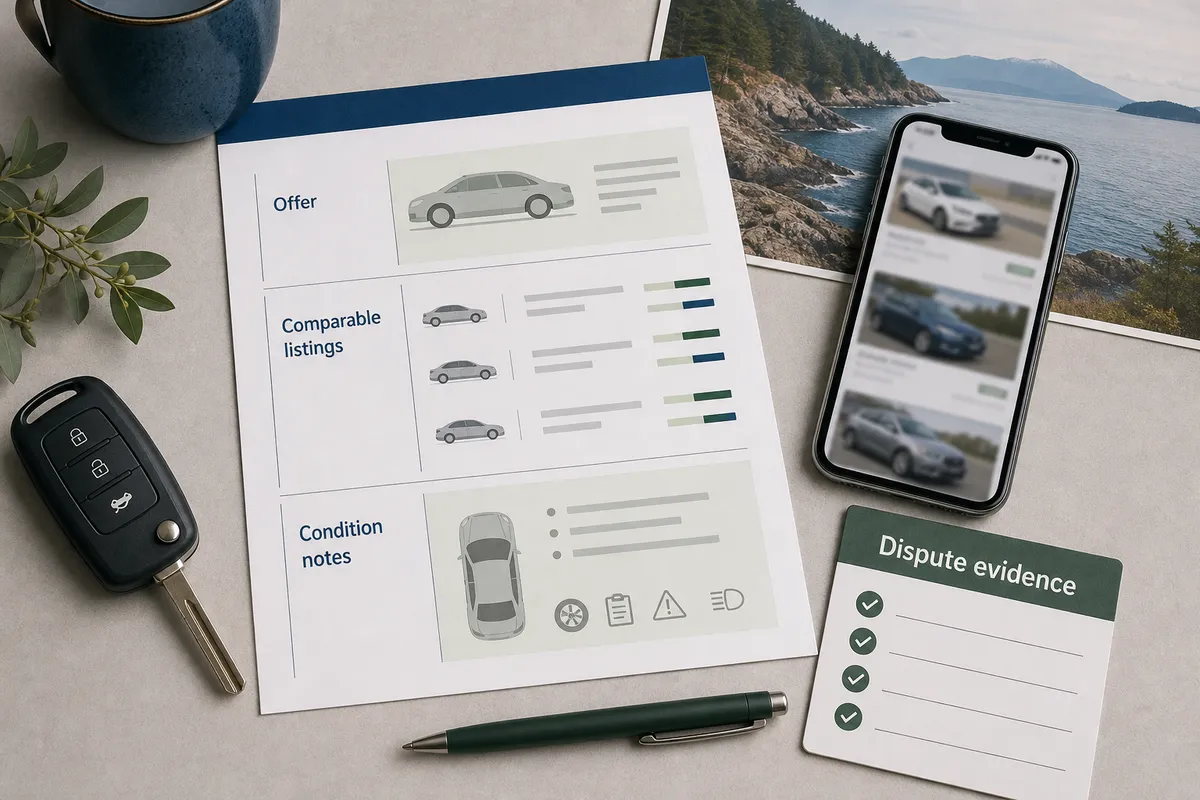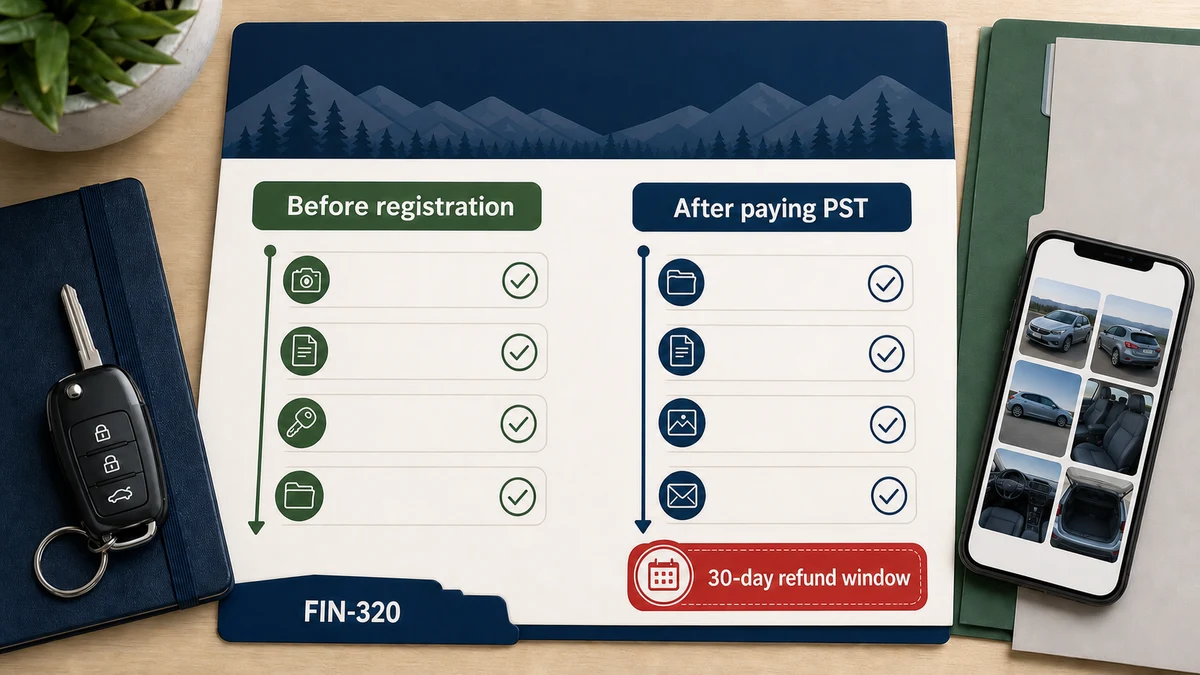
A FIN-320 can be useful at two very different moments in a private vehicle purchase:
- before or at registration, when you want the appraised value considered as PST is calculated; or
- after registration, when PST has already been paid and you are preparing a refund application.
The form may be the same, but the timing and paperwork are not. The after-registration route has a strict deadline, so it helps to know which path you are on before documents start moving.
Quick answer: If you have not registered the vehicle yet, arrange the appraisal first and bring the completed FIN-320 when you register. If you already registered and paid PST, the BC Ministry of Finance must receive the completed FIN-355/MV refund application and FIN-320 within 30 days from the registration date.
This guide explains the two paths in plain language. It is general information, not tax or legal advice; use the current provincial forms and contact the Ministry of Finance if your facts are unusual.
What the official FIN-320 instructions say
The provincial FIN-320 Motor Vehicle Appraisal Form gives buyers two ways to have an appraised value considered:
- present the completed FIN-320 when the vehicle is registered; or
- for a refund, provide the FIN-320 with a completed FIN-355/MV application.
For the refund route, the Ministry must receive both forms within 30 days from the date the vehicle was registered.
The BC PST 308 bulletin also explains an important calculation point for private sales. When the purchase price and the FIN-320 appraised value are both below the Canadian Black Book average wholesale value, PST is generally calculated on the greater of the purchase price or the appraised value.
That means a FIN-320 documents supportable retail value. It does not simply replace the purchase price with any lower number.
Path 1: Get the FIN-320 before registration
The pre-registration path is usually simpler because the value question is addressed before PST is paid.
Step 1: Check whether an appraisal fits the file
A FIN-320 may be worth reviewing when the vehicle's actual condition and market value appear lower than the generic average wholesale value being used for tax purposes. Common value factors include:
- high kilometres;
- mechanical faults or warning lights;
- collision history or rebuilt status;
- body damage, rust, worn tires, or interior wear;
- missing equipment or non-working features;
- specialty, imported, modified, work-use, or uncommon vehicles that need closer market context.
An appraisal is not automatically helpful in every purchase. If the purchase price is already higher than the appraised value, the purchase price can still be the relevant floor for the tax calculation.
Step 2: Gather the vehicle evidence
A remote appraiser needs enough evidence to identify the vehicle and understand its condition. Prepare:
- VIN and odometer photos;
- front, rear, both sides, and three-quarter exterior views;
- dashboard and interior photos;
- close-ups of damage, rust, warning lights, worn tires, or missing parts;
- bill of sale or purchase details;
- service, inspection, import, or repair records when they affect the value story.
Use the FIN-320 vehicle photo guide if you want a shot-by-shot checklist before uploading.
Step 3: Have the appraisal completed
The appraiser reviews the vehicle evidence, market context, mileage, history, and condition. If the file is supportable, the completed FIN-320 records the appraised retail value and the information required by the provincial form.
Step 4: Present the FIN-320 when you register
Bring the completed form with the other documents required for the vehicle transfer and registration. Handling the appraisal before registration avoids turning the same value question into a refund file later.
Path 2: You already registered and paid PST
Registration does not necessarily end the appraisal route, but the process becomes a refund application and the deadline matters.
Step 1: Write down the registration date
The 30-day period runs from the date the motor vehicle was registered. It is not described as 30 days from the appraisal date or the date you first noticed the tax amount.
Because the Ministry must receive the package within that period, do not treat day 30 as a mailing or preparation target.
Step 2: Order the appraisal promptly
The vehicle still needs enough current evidence for an appraiser to support a retail value. Gather the same photo and condition file you would have prepared before registration, plus the registration and tax details from the completed transaction.
Step 3: Prepare the FIN-355/MV refund package
The FIN-320 is the valuation document. The FIN-355/MV is the refund application. A complete file may also require transaction and payment evidence listed in the current refund-form instructions.
Keep the file organized around four questions:
- What vehicle was registered?
- When was it registered and how much PST was paid?
- What was the actual purchase price?
- What evidence supports the lower appraised retail value?
Read the FIN-355 PST refund filing guide for a fuller document checklist, or use the BC vehicle PST refund eligibility checker to sort the likely next step.
Step 4: Submit early enough to meet the receipt deadline
Follow the current FIN-355/MV instructions for the submission method and required attachments. If the deadline is close, contact the Ministry of Finance rather than assuming a late or incomplete package will be accepted.
Before vs after registration: the practical difference
| Question | Before or at registration | After PST has been paid |
|---|---|---|
| Main valuation form | FIN-320 | FIN-320 |
| Additional refund form | Not normally part of this path | FIN-355/MV |
| Goal | Have the appraised value considered when PST is calculated | Ask the Ministry to review a refund after PST was paid |
| Timing pressure | Complete the appraisal before the registration visit | Ministry must receive FIN-355/MV and FIN-320 within 30 days of registration |
| Extra paperwork | Vehicle, purchase, and registration documents | Vehicle evidence plus registration, tax, purchase, payment, and refund documents |
| Operational risk | Arriving without the completed appraisal | Missing the receipt deadline or submitting an incomplete refund file |
Three timing mistakes to avoid
Mistake 1: Registering first and planning to “sort it out later”
The refund route exists, but it adds a second form, supporting proof, a submission step, and a receipt deadline. If you know the vehicle may need a condition-based appraisal, deal with that question before registration when possible.
Mistake 2: Assuming the 30-day rule runs from purchase
The FIN-320 instructions tie this refund deadline to the registration date. Keep the registration record in the file and calculate the timeline from that date.
Mistake 3: Treating the appraisal as a guaranteed refund
A FIN-320 supports the vehicle's appraised retail value. The Ministry decides whether the refund application and evidence meet the provincial requirements. No appraiser can guarantee the tax outcome.
When a timing review is especially useful
Consider checking the appraisal path before registration when:
- the vehicle has visible or documented condition issues;
- the odometer is much higher than typical examples;
- the vehicle is imported, right-hand drive, rebuilt, modified, or otherwise difficult to compare;
- a generic book value appears disconnected from the actual vehicle;
- you are buying remotely and want the photo file organized before the broker visit.
If PST was already paid, check the registration date immediately. The best next step may be an urgent appraisal-and-refund document review rather than more price research.
How IC Appraisal BC handles the two paths
IC Appraisal BC uses a remote photo and document workflow across British Columbia. Standard FIN-320 appraisals are a flat $75. Once a file is accepted and the required evidence is complete, the appraisal is typically returned in about one hour.
Start by telling us whether the vehicle is:
- not registered yet, so the FIN-320 is intended for the registration visit; or
- already registered, so the exact registration date and refund deadline need to be checked.
That one detail helps us point the file toward the correct workflow before you pay.
Start the appraisal application or review FIN-320 vs FIN-355 in BC if you still need help choosing the form.
Official resources and next steps
- FIN-320 Motor Vehicle Appraisal Form
- BC provincial sales tax publications
- Private-sale vehicle tax guide
- FIN-320 vehicle photo guide
- FIN-355 PST refund filing guide
- Get an appraisal
Bottom line
If registration has not happened, complete the FIN-320 first and present it when the vehicle is registered. If PST has already been paid, move quickly: the Ministry must receive the FIN-355/MV application and FIN-320 within 30 days of the registration date.
The cleanest file is the one that connects the timing, purchase details, vehicle photos, condition evidence, and appraised retail value without contradictions.